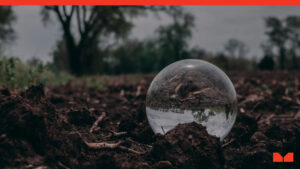
Soil is your greatest asset
Healthy soil holds more water, cycles nutrients more efficiently, and supports stronger crops season after season.
Healthy soil matters more than you think
Soil is just dirt, right? Wrong. Soil is actually Earth’s most overlooked and essential natural resource.
Lucky for us, there’s a solution to creating healthy soil that can sustain us for generations.
What is soil health?
The USDA defines soil health as an assessment of how well soil performs all its functions now and how those functions are being preserved for future use.
Essentially, healthy soil can continue to grow plants and support life for the long term.
Why does soil health matter?
Healthy soil makes a big difference in many ways. It helps reduce water use, grow nutrient-rich crops, protect biodiversity, and build resilience against climate challenges. Healthy soil can help farmers use less fertilizer and pesticides while increasing crop yield and value.
Ultimately, healthy soil leads to a healthier planet for all living things.
The problem
If we don’t improve our soil, our food production system won’t last. To keep growing enough food for everyone, we need to start taking care of our soil now.
With current farming practices, there are only about 60 harvests left. But there’s hope: healthier soil can make a big difference. Research shows that boosting soil biology helps improve soil health, fertility, and function.
What’s the solution?
At MyLand, we’re dedicated to helping growers rebuild healthy soil quickly and easily through the MyLand Service. Mention microalgae.
“A gram of soil — about a quarter of a teaspoon — can easily contain a billion bacterial cells and several miles of fungal filaments”
–Kate Scow, Professor of Soil Science & Microbial Ecology
Soil health benefits for growers
From healthier fields to higher returns, healthy soil is foundational to farm success.

Healthier microbial diversity
Microalgae feed the microbiome, supporting microbial life that feeds your plants.

Improved water management
Microalgae helps regulate moisture retention and increase resilience against drought.

Nutrient cycling
Microalgae helps free up nitrogen, phosphorus, iron, and zinc, making them available for plants.

Increased organic matter
As microalgae grow and decompose, they build stable organic matter that feeds microbes, fungi, and soil fauna.

Stronger aggregation
Microalgae improves soil structure by releasing polysaccharides that enhance aggregation.

Lower soluble salts
Microalgae reduces salt buildup in soil, which helps restore balance and improve root growth.
Be a soil champion
You don’t need to overhaul your operation to improve soil health. Small changes go a long way.
Every action you take builds stronger soil, stronger crops, and a stronger future for your farm.